
Myo Fascial Release

Creating space to welcome you home to your body
Despite our thinking, your body isn’t a collection of separate parts. It’s a continuous, living network, moving, adapting, responding to everything you do.
And sometimes, it gets stuck.
Tension often starts small, like a molehill you can brush off and reset. Left alone, it builds, physically and mentally, until it feels more like a mountain.
It can come from injury, repetition, long hours sitting or working. Even subtle shifts in how you think, move, or hold yourself can create patterns your body starts to hang onto. Over time, these patterns can show up as tightness, restriction, or pain that feels hard to pinpoint.
Myofascial Release works by gently meeting those patterns and giving your body the space to respond differently.
What is Myo Fascial Release?
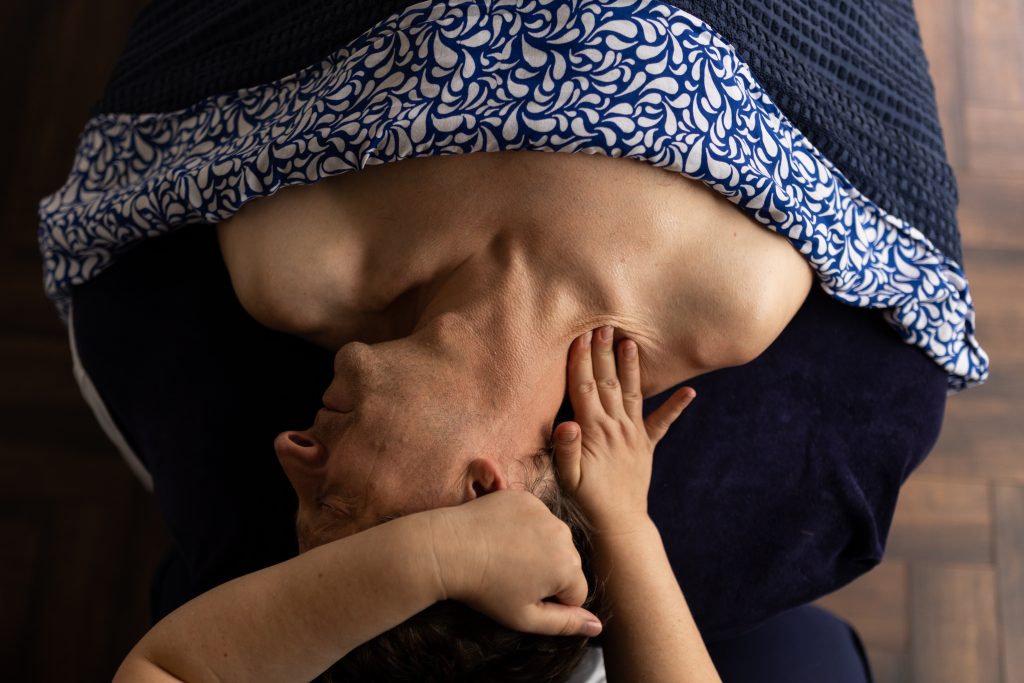
Myofascial Release (MFR) is a slow, hands on treatment that works with the body’s connective tissue, known as fascia.
Fascia is a continuous, three dimensional web running through and around the body, connecting structures like muscles and bones.
Instead of focusing on isolated muscles, MFR looks at how the whole body is connected, this is called biotensegrity.
- Restrictions in one area can affect movement elsewhere
- Pain isn’t always where the problem starts
MFR uses sustained, gentle pressure to encourage this tissue to soften, lengthen, and move more freely.
A different way of working with your body
This isn’t a fast or forceful technique, it’s peaceful and present.
In practice, this looks like:
- Slow and deliberate, pressure is held and allowed to change over time
- Guided by your body, not imposed onto it
- Within your comfort, never forced or pushed into pain
- Whole body focused, not just the area that hurts
Unlike traditional massage, this isn’t about working through the muscles, it’s about listening to what the tissue is doing and responding to it
What this work can support
Myofascial Release can support mental and physical issues, including:
- Persistent aches and pains
- Neck, shoulder and back tension
- Headaches and jaw (TMJ) discomfort
- Postural strain
- Recovery from injury
- Scar tissue and movement restriction
- General stiffness and reduced mobility
It can also be helpful when pain has been difficult to pinpoint or hasn’t responded to more focused treatment.
What it feels like
People often expect deep pressure, but MFR feels different. It works deeply, but in a gentler way.
You might notice things like:
- A slow stretch or gentle pulling sensation
- A feeling of warmth as the tissue softens
- A sense of release, or tissue easing
- A deep sense of relaxation as your nervous system settles
It shouldn’t feel sharp or overwhelming. It works at a level your body can respond to, not resist.
Letting your body lead the process
You don’t need fixing, you need support. This work is about giving your body the space to change.
- Allowing restricted areas of the body to start moving again
- Helping different parts of the body work better together
- Supporting more natural, efficient movement in the body
For some, changes feel immediate. For others, it builds gradually over time. Everybody responds differently.
A grounded, no fluff approach
MFR gets described in a lot of different ways online.
How I work at Little Cottage Massage:
- I focus on real, physical changes in tissue and movement
- My work is grounded in a scientific approach
- I keep things clear and respect your experience
Creating change gently
You don’t need to force change.
You don’t need to push through pain.
Sometimes, the most effective work is giving your body the time and space to respond.
If this way of working feels like something your body needs, you’re welcome to get in touch or book in when it feels right.